Sometimes one tiny emoji can say “actually…” better than a whole paragraph.
When someone says something that needs correcting, questioning, or adding a little attitude, the Actually Emoji can completely change the tone.
Instead of sounding cold or overly serious, emojis make that correction feel playful, expressive, or even flirty. Let’s explore the most useful options and how people use them in everyday chats.
The right emoji can turn into a simple “actually…” into a whole mood.
What do Emoji Actually Mean?
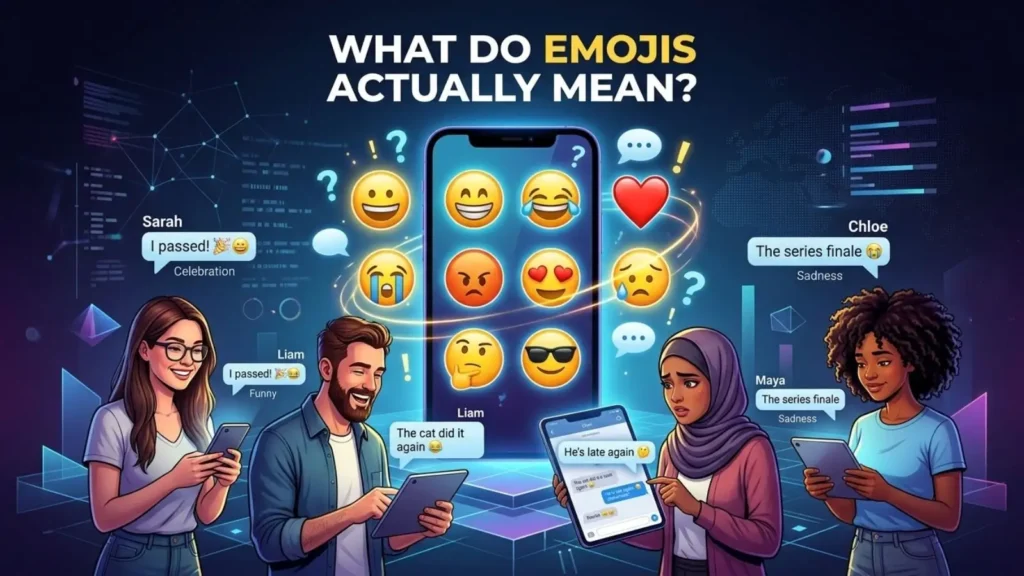
There is no single official actually emoji in the Unicode emoji set. Instead, people use reaction-style emojis to communicate the feeling behind “actually”such as doubt, correction, skepticism, confidence, or playful disagreement.
The best choice depends heavily on context. A neutral face can make “actually…” sound serious, while a smirking face can make the same word feel teasing or confident.
| Emoji | Core meaning | Misread as | Best used when |
| 😏 | Knowing, confident, teasing | Arrogance or flirting | You want playful attitude |
| 🤔 | Thinking or questioning | Confusion | You are challenging a claim |
| 🙄 | Skepticism or annoyance | Strong anger | Something sounds unbelievable |
| 😐 | Neutral or unimpressed | Coldness | You want a restrained reaction |
| 😑 | Disbelief or irritation | Rudeness | Someone keeps making a point |
| 😌 | Calm confidence | Satisfaction | You quietly know you’re right |
| 😉 | Playful hint | Flirting | Your correction has a teasing tone |
| 😎 | Confidence or coolness | Showing off | You are casually confident |
| 🤨 | Doubt or suspicion | Anger | You question what someone said |
| 😅 | Awkward relief | Nervousness | You correct something lightly |
😏 Smirking Face
Meaning: Knowing confidence, playful attitude, or a teasing tone.
Example 1: Actually, I knew that 😏
Example 2: You thought I forgot, actually 😏
🤔 Thinking Face
Meaning: Questioning, considering, or politely challenging an idea.
Example 1: Actually, are you sure about that? 🤔
Example 2: I think there is another answer 🤔
🙄 Face with Rolling Eyes
Meaning: Skepticism, disbelief, or mild annoyance.
Example 1: Actually, that is not what happened 🙄
Example 2: You really believe that? 🙄
😐 Neutral Face
Meaning: A restrained, neutral, or unimpressed reaction.
Example 1: Actually, I have no comment 😐
Example 2: That was your best excuse? 😐
😑 Expressionless Face
Meaning: Dry disbelief, irritation, or a tired reaction.
Example 1: Actually, we already discussed this 😑
Example 2: You forgot again, actually 😑
😌 Relieved Face
Meaning: Calm satisfaction, peaceful confidence, or quiet self-assurance.
Example 1: Actually, everything worked out 😌
Example 2: I knew it would be fine 😌
😉 Winking Face
Meaning: A playful hint, joke, or teasing undertone.
Example 1: Actually, you know I was right 😉
Example 2: I was waiting for you to notice 😉
😎 Smiling Face with Sunglasses
Meaning: Casual confidence, coolness, or self-assured humor.
Example 1: Actually, I already handled it 😎
Example 2: No worries, I had a plan 😎
🤨 Face with Raised Eyebrow
Meaning: Doubt, suspicion, or questioning someone’s statement.
Example 1: Actually, how did you get that idea? 🤨
Example 2: Are you sure that’s true? 🤨
😅 Grinning Face with Sweat
Meaning: Awkwardness, nervous humor, or softening an uncomfortable correction.
Example 1: Actually, I sent it to the wrong person 😅
Example 2: You were right… actually 😅
How to use actually emoji the right way
On WhatsApp emojis, the best approach is to match the emoji to the relationship. With friends, 😏 or 😉 can make a correction playful, while 😐 or 🤔 works better when you want to sound calm.
For Instagram emojis, presentation matters more. A creator might use 😎 or 😏 in a caption when adding confidence or attitude. Keeping the combination short often makes the message look cleaner and more intentional.
On TikTok, these reactions often work with humor, irony, and unexpected corrections. An emoji such as 🙄, 🤨, or 😅 can make a short comment feel more expressive without adding another sentence.
Do: Choose an emoji that matches your actual tone, use fewer emojis when making a serious point, and consider who will read your message.
Don’t: Use 🙄 or 😑 when you need to sound respectful, assume 😉 is always romantic, or add several reaction emojis when one already communicates the feeling.
Best actually emoji combos copy & paste
Romantic
👉 😏❤️ Add playful confidence to a romantic message.
👉 😉❤️ Use when affection comes with a teasing hint.
👉 😌❤️ Works for a calm, affectionate message.
Cute
👉 😅😉 A lighthearted way to admit something awkward.
👉 😌😉 Soft, playful confidence for casual chats.
👉 🤔😅 Good for a cute moment of uncertainty.
Flirty
👉 😏😉 A classic teasing combination for playful conversations.
👉 😎😉 Confident and slightly cheeky without being too serious.
👉 😏❤️ Adds a romantic edge to a confident message.
Missing someone
👉 😌❤️ A gentle way to express warm feelings.
👉 😅❤️ Useful when admitting you miss someone shyly.
👉 😉❤️ Adds a playful touch to an affectionate message.
Good night
👉 😌❤️ A peaceful and affectionate bedtime message.
👉 😉😌 Works for a playful but soft good-night text.
👉 😏😉 Best when the conversation has a teasing tone.
Trending Actually Emoji in 2026
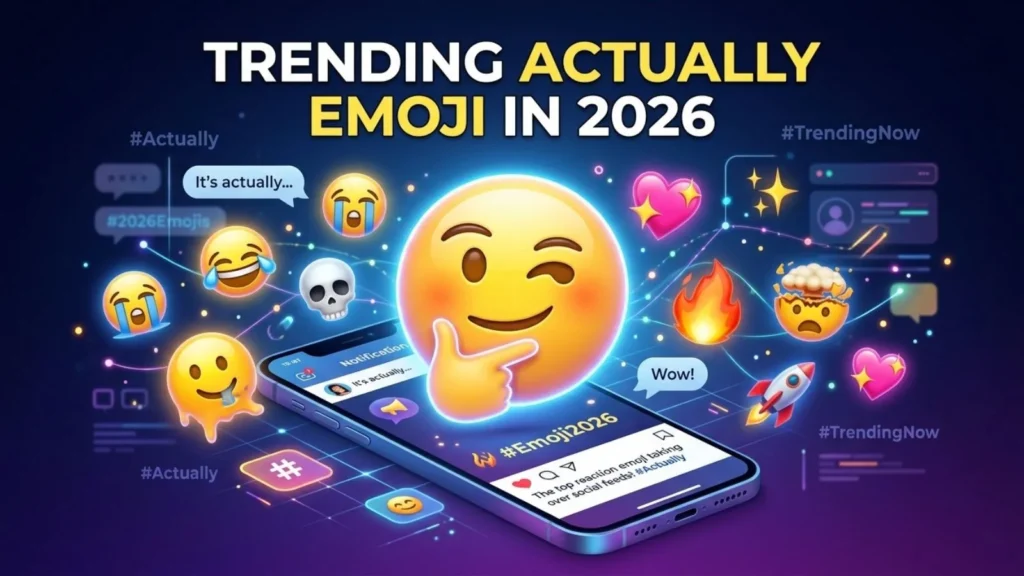
In trending emojis 2026, reaction-based emojis remain useful because they communicate tone quickly. The “actually” feeling is especially flexible, moving from genuine questioning to dry humor depending on the conversation.
😏 is popular in playful chats and captions where people want confidence or irony. 🤨 fits comments where someone is questioning a statement, while 🙄 is often used for exaggerated disbelief or humorous annoyance.
Content creators can also use 😅 to soften awkward moments and 😎 when presenting a confident or intentionally cool response. These choices are particularly useful in short-form social content where visual tone matters.
| Emoji | Why trending | Who uses it | Platform |
| 😏 | Adds playful attitude quickly | Friends and creators | WhatsApp, Instagram, TikTok |
| 🤨 | Communicates doubt visually | Commenters and casual users | TikTok, Instagram |
| 🙄 | Works well with humorous reactions | Social media users | WhatsApp, TikTok |
| 😅 | Softens awkward or ironic statements | Creators and chat users | Instagram, WhatsApp |
As emoji communication keeps evolving, familiar reaction symbols can take on fresh shades of meaning as online conversations and cultural habits change.
FAQs
1. What is the most popular emoji?
😏 is one of the strongest choices when “actually” is meant to sound confident, teasing, or slightly cheeky. For genuine questioning, 🤔 is often more suitable.
2. What does 😏 mean from a girl or boy?
The meaning usually depends on the conversation rather than gender. It can suggest confidence, teasing, irony, or flirting when the surrounding message supports that tone.
3. Why do emojis look different on iPhone vs Android?
Apple, Google, Samsung, and other platforms design their own emoji artwork. The basic Unicode meaning stays similar, but facial expressions, shapes, and details can look noticeably different.
4. Are actually emoji used differently in other countries?
Yes, emoji meanings can shift with local communication habits and culture. A reaction that feels playful in one community may sound sarcastic or more serious somewhere else.
Conclusion:
The best Actually Emoji is the one that matches the feeling behind your words, whether you are questioning, correcting, teasing, or simply reacting.
Use the context, relationship, and platform to guide your choice.
A small reaction can make an ordinary message feel much clearer, warmer, and more natural.

I am a technology writer and digital content creator at LinkNestPro, passionate about simplifying complex topics into clear, practical, and engaging content.
My focus is on technology, digital tools, online resources, productivity, and web trends, helping readers discover reliable information and practical solutions to enhance their digital experience.