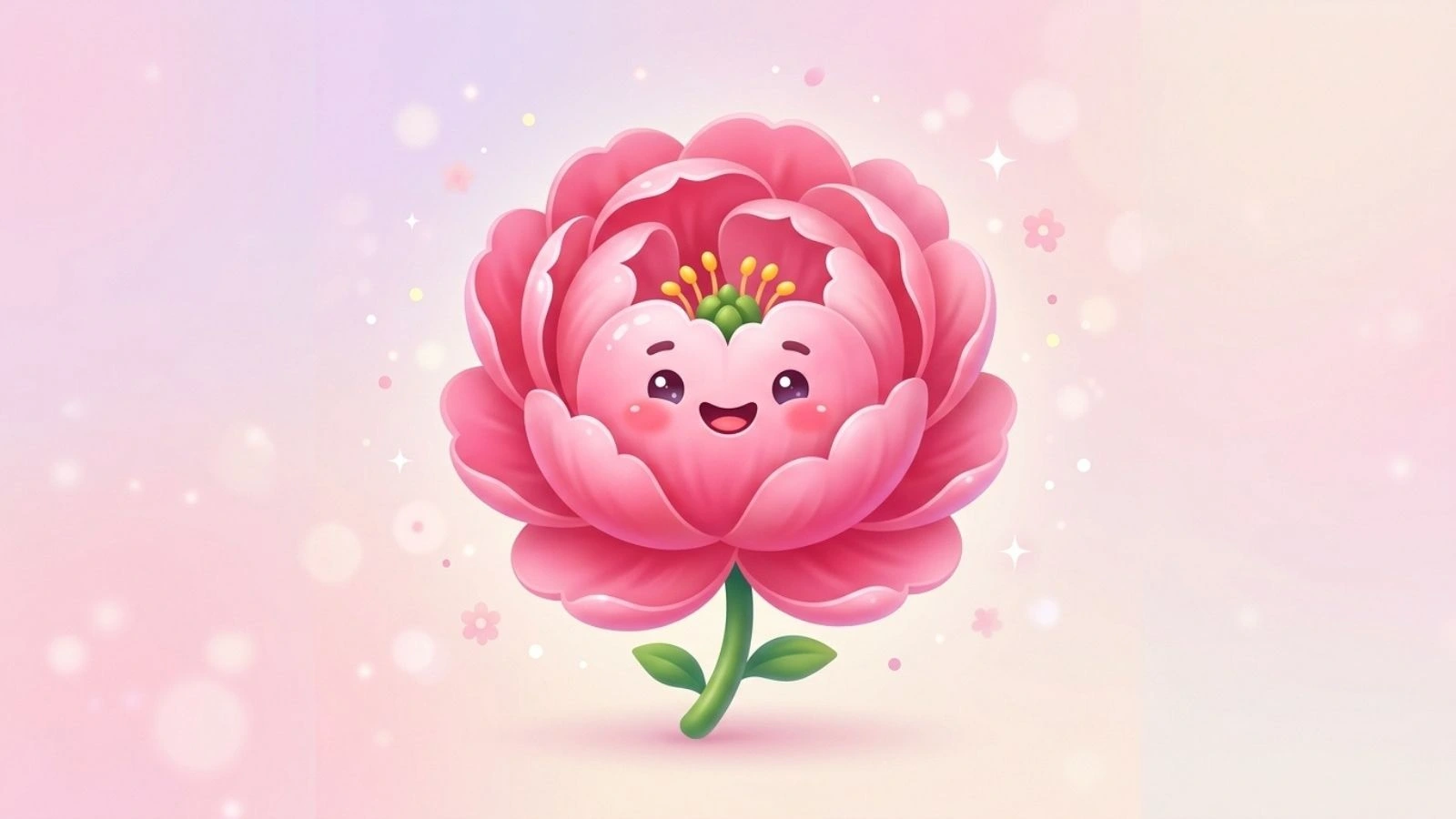
Looking for a soft floral emoji that captures the beauty of a peony? 🌸 is a popular choice for expressing elegance, affection, and fresh beauty.
Imagine posting a photo of blooming flowers or sending a sweet message without wanting to say too much.
The 🌸 emoji can add that gentle floral feeling instantly. There is no dedicated official Unicode “peony emoji,” so people often use 🌸 for peony-inspired messages, captions, and designs.
In this guide, you’ll discover its emoji meanings, everyday uses, copy-paste emojis, platform tips, and how floral expressions are appearing in trending emojis 2026.
Sometimes one delicate flower says what a whole sentence cannot.
What do Peony Emoji Mean?
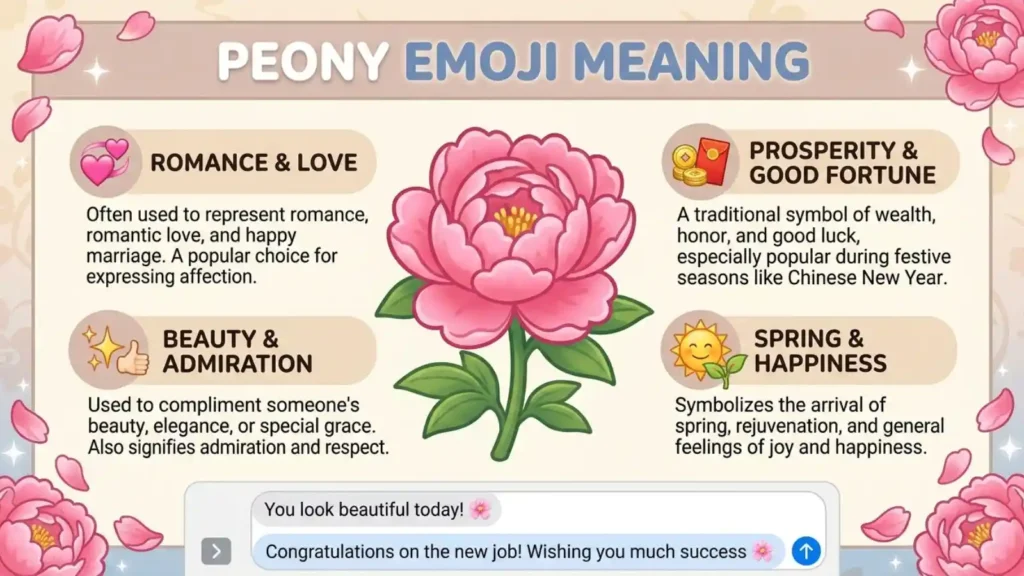
The peony emoji usually refers to 🌸 when someone wants to represent a peony digitally. Although 🌸 is officially a blossom emoji rather than a specific peony, its soft appearance makes it a natural choice for floral conversations.
Context can change the feeling. A 🌸 in a romantic message can feel affectionate, while the same emoji in an Instagram caption may simply create an elegant, spring-inspired mood.
Other flowers in the same visual family can also help create a peony-like floral aesthetic. Here are the main options and their common conversational roles:
| Emoji | Core meaning | Misread as | Best used when |
| 🌸 | Blossom, beauty, gentle affection | A specific flower | Floral captions and sweet messages |
| 🌺 | Tropical flower, vivid beauty | A generic blossom | Bright and expressive posts |
| 🌷 | Tulip, spring, elegance | Any pink flower | Soft seasonal messages |
| 🪻 | Lavender, calm, delicate beauty | A purple flower | Peaceful and aesthetic content |
| 🏵️ | Rosette, decoration, honor | A regular flower | Decorative or traditional themes |
| 💐 | Bouquet, celebration, flowers | One individual flower | Gifts, congratulations, and special moments |
🌸 is especially useful when you want a simple floral touch without making your message feel overly dramatic. It works naturally in personal chats, captions, bios, comments, and decorative text.
🌸 Peony blossom
Meaning: A soft floral symbol often used for beauty, tenderness, freshness, and graceful affection.
Example 1: Your garden looks beautiful 🌸
Example 2: Sending you a little springtime happiness 🌸
🌺 Hibiscus
Meaning: Bright floral beauty, warmth, confidence, and an expressive tropical mood.
Example 1: This vacation view is everything 🌺
Example 2: Adding a little color to today 🌺
🌷 Tulip
Meaning: Springtime charm, elegance, affection, and gentle positivity.
Example 1: Fresh flowers make everything better 🌷
Example 2: A beautiful day for new beginnings 🌷
🪻 Lavender
Meaning: Calmness, softness, peaceful energy, and a relaxed aesthetic.
Example 1: Taking a quiet moment for myself 🪻
Example 2: Peaceful evenings feel different 🪻
🏵️ Rosette
Meaning: Decorative beauty, recognition, celebration, and traditional floral style.
Example 1: Celebrating a beautiful achievement 🏵️
Example 2: Adding a classic touch to the design 🏵️
💐 Bouquet
Meaning: Flowers given as a gift, celebration, appreciation, or a thoughtful gesture.
Example 1: Thank you for making my day special 💐
Example 2: Congratulations on your big moment 💐
🌹 Rose
Meaning: Romance, love, admiration, and strong emotional affection.
Example 1: You deserve something beautiful 🌹
Example 2: A little romance for tonight 🌹
🌼 Blossom Flower
Meaning: Cheerfulness, simplicity, friendliness, and bright natural beauty.
Example 1: Keep smiling through the little things 🌼
Example 2: Such a cheerful morning 🌼
🌻 Sunflower
Meaning: Happiness, positivity, warmth, and an uplifting outlook.
Example 1: Choose happiness today 🌻
Example 2: Your energy always brightens the room 🌻
🪷 Lotus
Meaning: Peace, purity, calmness, and graceful personal growth.
Example 1: Finding peace in the little moments 🪷
Example 2: Growing through every experience 🪷
How to use peony emoji the right way
On WhatsApp, floral emojis work well in personal and emotional conversations. A simple 🌸 can soften a message, while 💐 can make congratulations or appreciation feel more thoughtful.
On Instagram, flowers are especially useful for aesthetic captions, beauty posts, wedding content, garden photos, and lifestyle branding. 🌸 and 🪷 can create a clean visual style without overwhelming the caption.
On TikTok, floral emojis can appear in captions, comments, and playful conversations. Their meaning can become humorous or ironic depending on the surrounding text and video.
Do: Match the flower with the mood, keep combinations readable, and use floral emojis to add personality.
Don’t: Assume every flower represents a specific species, overload a short message with flowers, or rely on an emoji alone when your meaning could be unclear.
Best peony emoji combos copy & paste
Romantic
👉 🌸🌹 Add a soft romantic touch to a loving message.
👉 🌹💐🌸 Perfect for showing affection with a floral feel.
👉 🌷🌸🌹 A gentle combination for romantic captions.
Cute
👉 🌸🌼 Use for a cheerful and adorable message.
👉 🌸🌷🪻 Great for soft, pastel-style captions.
👉 🌼🌻🌸 Adds a bright and playful floral mood.
Flirty
👉 🌸🌹 A subtle floral touch for a sweet message.
👉 🌷🌸🌹 Works nicely with a playful compliment.
👉 🌺🌸🌹 Adds a bolder, more expressive feeling.
Missing someone
👉 🌸💐 Send as a gentle reminder that you’re thinking of someone.
👉 🌷🌸 Perfect for a simple “thinking of you” message.
👉 🌹🌸🪻 Creates a softer emotional tone without using many words.
Good night
👉 🌸🪻 A peaceful floral combination for bedtime messages.
👉 🪷🌸 Use for a calm and gentle good-night caption.
👉 🌷🌸💐 A sweet way to close the day warmly.
Trending Peony Emoji in 2026
Floral expressions continue to fit naturally into visual communication because they can make short messages feel more personal. In 2026, 🌸, 🌷, 🪻, and 💐 are particularly useful for aesthetic captions, lifestyle content, personal messages, and seasonal posts.
🌸 works well with minimalist and beauty-focused content because of its simple appearance. Younger users and content creators can use it in captions and comments when they want a soft visual accent.
🌷 suits spring-inspired posts and gentle personal messages, while 🪻 fits calm, pastel, and wellness-inspired aesthetics. 💐 is useful around celebrations, gifts, milestones, and appreciation posts.
| Emoji | Why trending | Who uses it | Platform |
| 🌸 | Simple and aesthetic floral accent | Creators and everyday users | Instagram, WhatsApp |
| 🌷 | Soft seasonal appearance | Lifestyle and beauty audiences | Instagram, TikTok |
| 🪻 | Calm, delicate visual style | Aesthetic content creators | Instagram, TikTok |
| 💐 | Strong connection with gifts and celebrations | Friends, families, creators | WhatsApp, Instagram |
Floral emoji usage continues to show how visual symbols can evolve with changing online styles and communication habits.
FAQs
1. What is the most popular peony emoji?
🌸 is the closest commonly used emoji for representing a peony because it has a soft blossom appearance. It can work well when a specific peony symbol is unavailable.
2. What does 🌸 mean from a girl or boy?
The meaning usually depends more on the conversation than the sender’s gender. It can express sweetness, beauty, affection, freshness, or simply a floral aesthetic.
3. Why do emojis look different on iPhone vs Android?
Apple, Google, Samsung, and other platforms create their own emoji artwork. The underlying Unicode character stays the same, but its visual design, colors, and details can differ.
4. Are peony emoji used differently in other countries?
Yes, floral symbols can carry different cultural associations depending on the country and context. 🌸 may represent beauty or blossoms broadly rather than specifically referring to a peony.
Conclusion:
The Peony Emoji is a lovely way to bring softness and floral personality into everyday digital conversations.
Since there is no dedicated peony symbol, 🌸 provides a simple and recognizable alternative.
Use it naturally in messages, captions, and copy paste emojis to make your words feel a little more beautiful.

Hi, I’m a content writer at LinkNestPro. I enjoy creating clear, informative, and engaging content about technology, digital tools, online resources, and productivity.
My goal is to provide accurate, practical, and easy-to-understand information that helps readers make smarter decisions and discover useful solutions.